Every event can be described by one of three categories. The first are the Wajibat, i.e. these events must exist by necessity and their non-existence is inconceivable. The second category is called Mumkinat, or possible events. A mumkin possesses equally the potentiality to exist or to not exist, these events are logically possible. Lastly we have the Muhallat or the logical impossibilities/absurdities. A muhal cannot exist under any circumstance, as such events violate the intrinsic laws of logic, such as the whole being greater than the part, causes preceding effects, and for a statement to be either true or false. God is the necessary existence that anchors the rest of creation, thus it is inconceivable for God to not exist, i.e. He is Wajib ul Wujood. The universe on the other hand has the potential to either exist or to not exist, which means it is a mumkin. God has willed for it to exist over its non-existence. Similarly, everything that transpires in the domain of creation does so because of God’s Power and Will which bring it from adam (non-existence) to wujud (existence). Note here that non-existence is not a substance in itself but is merely the lack of existence. An insightful analogy is that of light and dark. The dark is not substance in itself but merely the absence of light, in a similar fashion something non-existent simply lacks the “light” of existence. The subset of mumkinat contains all logical possible events, as explained earlier. These include the “normal” happenings observed in our everyday lives, the sun setting, the blossoming of flowers, gravity’s downwards pull, etc, however in addition to these events the mumkinat also span the set of events that deviate from our everyday experiences. In short, events in accordance with observed natural patterns as well as those that violate the pattern are counted as mumkin. The latter are also referred to as Kharq e Aadat, i.e. when God forgoes/subverts His usual natural pattern and brings about the occurrence of an event that subverts the observed pattern. These deviations from the norm are what are collectively called miracles. The splitting of the sea, the morphing of a staff into a snake are occurrences not experienced in our everyday lives. We infer from our observations of nature that such events do not normally occur. Consider, for example, the miraculous cooling of the fire that occurred for the Prophet Ibrahim. Our normative sensory data teaches us that fire will burn whenever it is lit. Fire causing cooling, however implausible it may seem, is logically possible, i.e it is mumkin, and not muhall. Thus, to bring about such an event into existence is in God’s power i.e His Qudra. Due to one’s experiences being so uniform an average person may become convinced that the existence of a cooling fire is entirely inconceivable, however upon deeper reflection, despite his sensory experience, he will realise that it is not a logical impossibility. Let us assume that events A, B and C are all mumkinat and that event A is the normative experience of the natural pattern. Despite the consistent occurrence of A, B and C always remain equally probable in their capacity to be selected by God’s Will (Irada) and brought into by His Power (Qudra). Thus, at some point if God were to instead of A, bring about B and C, then a Kharq-e-Aadat would have been said to have occurred. For the observer, this will appear to be bizarre and strange. But note that since God’s Qudrah extends over all mumkinat the normative event and the Kharq-e-Aadat both are equally probable to be brought into existence from the Divine perspective. Hence, all logically possible events, normal or miraculous, are ontologically the same for God. This point needs to be emphasized strongly. A miracle despite its seemingly astounding perplexity is nothing more than simply another event that God chooses to bring into existence, instead of what He normally choses to bring into existence. To dismiss the possible existence of a Kharq-e-Aadat event then, simply on the basis of it not conforming to one’s everyday experience of nature is simply incorrect. A mumkin that escapes natural explanation is not equivalent to a muhall. Understanding this simple principle can help to alleviate the chaos and confusion that festers in the modern Muslim mind. God is capable of bringing about events that contravene the known laws of nature. He is not bound to obey them. The normative pattern that we nowadays call a law of nature is simply our best understanding of God’s Aadat. Therefore, it is extremely problematic to try to understand Moajzat (miracles) in the context of contemporary scientific laws. A miracle within the Islamic tradition is considered the ultimate proof of prophecy. Since God Almighty Has subverted the natural pattern at the hand of His messenger, it therefore becomes incumbent upon the receiving people to submit to the truth. The miracles also serve as humbling challenges, since they render the opponents of the messenger incapable of replicating such an event, since no one can subvert the normative pattern of nature but God. Miracles of the Prophet (PBUH) such as the splitting of the moon and the Mairaj are of paramount importance. They cannot and should not be reduced to mere natural events. The scientistic tendency to explain miracles is an unfortunate symptom of a modern reaction to modernity that has cropped up in contemporary Muslims. However fanciful it may appear superficially, it is nothing but a masked capitulation to materialist thought. I say masked because its proponents tend to present it in opposition to the deistic capitulations of modernists such as Sir Syed Ahmed Khan. This deistic capitulation is that God Almighty cannot bring about events that contravene natural law. However, the scientific miracles cabal despite their fickle veneer of championing tradition in opposition to modernity are in fact strongly in its clutches. To claim that the Mairaj of the Prophet (PBUH) came about because of blackholes or that the splitting of the Moon was an optical illusion resulting from gravitational lensing is ludicrous to say the least. Such explanations are abominations, as they highlight the complete ignorance of their originators of the nature of miracles in Islam. Let us say that we were to accept their whimsical musings, what chasm then are we to fall into? That miracles are nothing but applied science which can potentially be reproduced in a lab or a computer simulation? That God is bound by our constructed laws of nature? How is this line of reasoning any better than its deistic counterpart? This phenomenon, particularly prevalent amongst urbanised educated Muslims is something that I label as “Islamic Scientism” of which there are many manifestations. All of them united by sheer jahalat (ignorance) of the Islamic tradition and, if I may add, contemporary science as well.
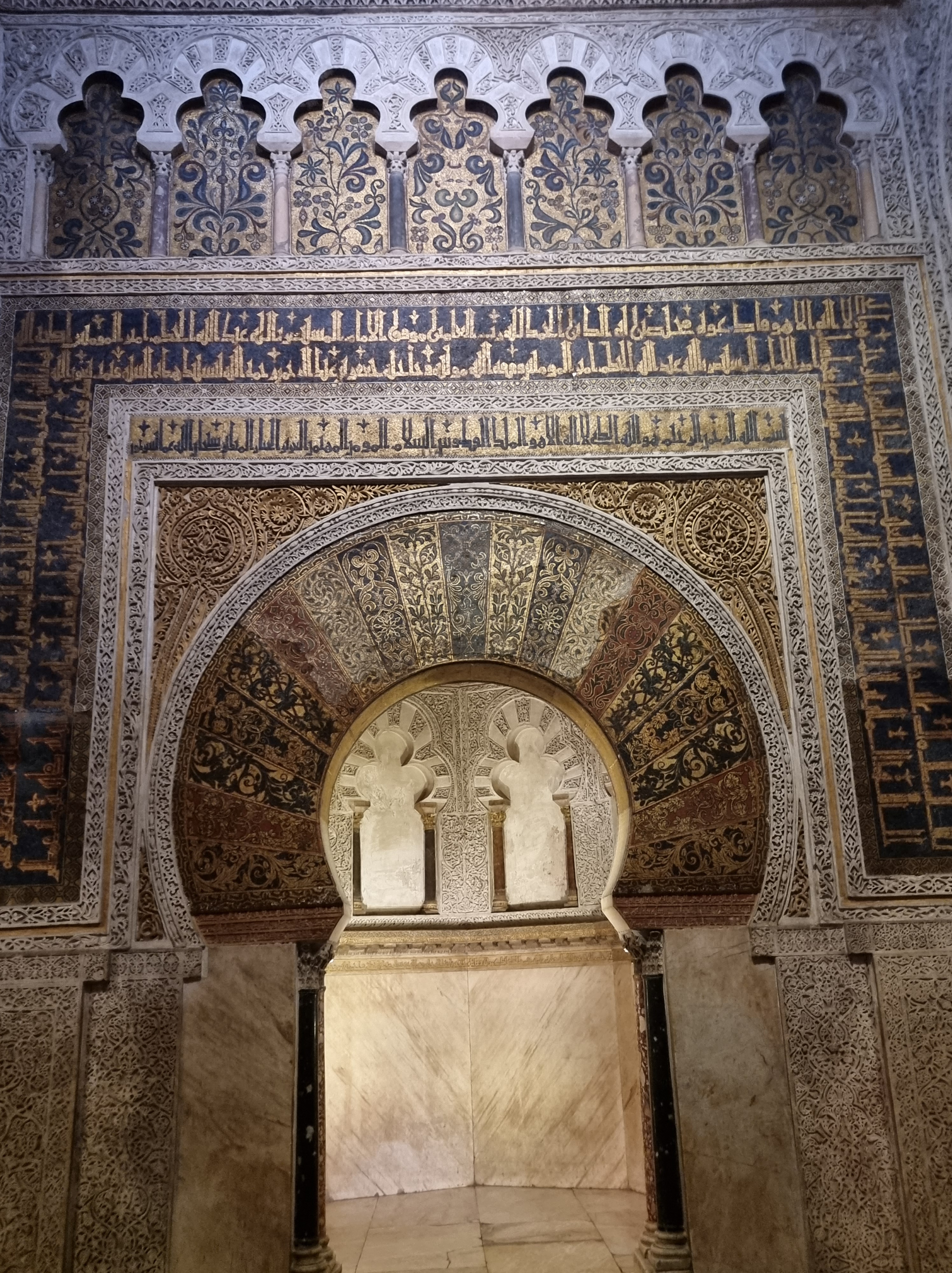
 Afkar-e-Qurtuba