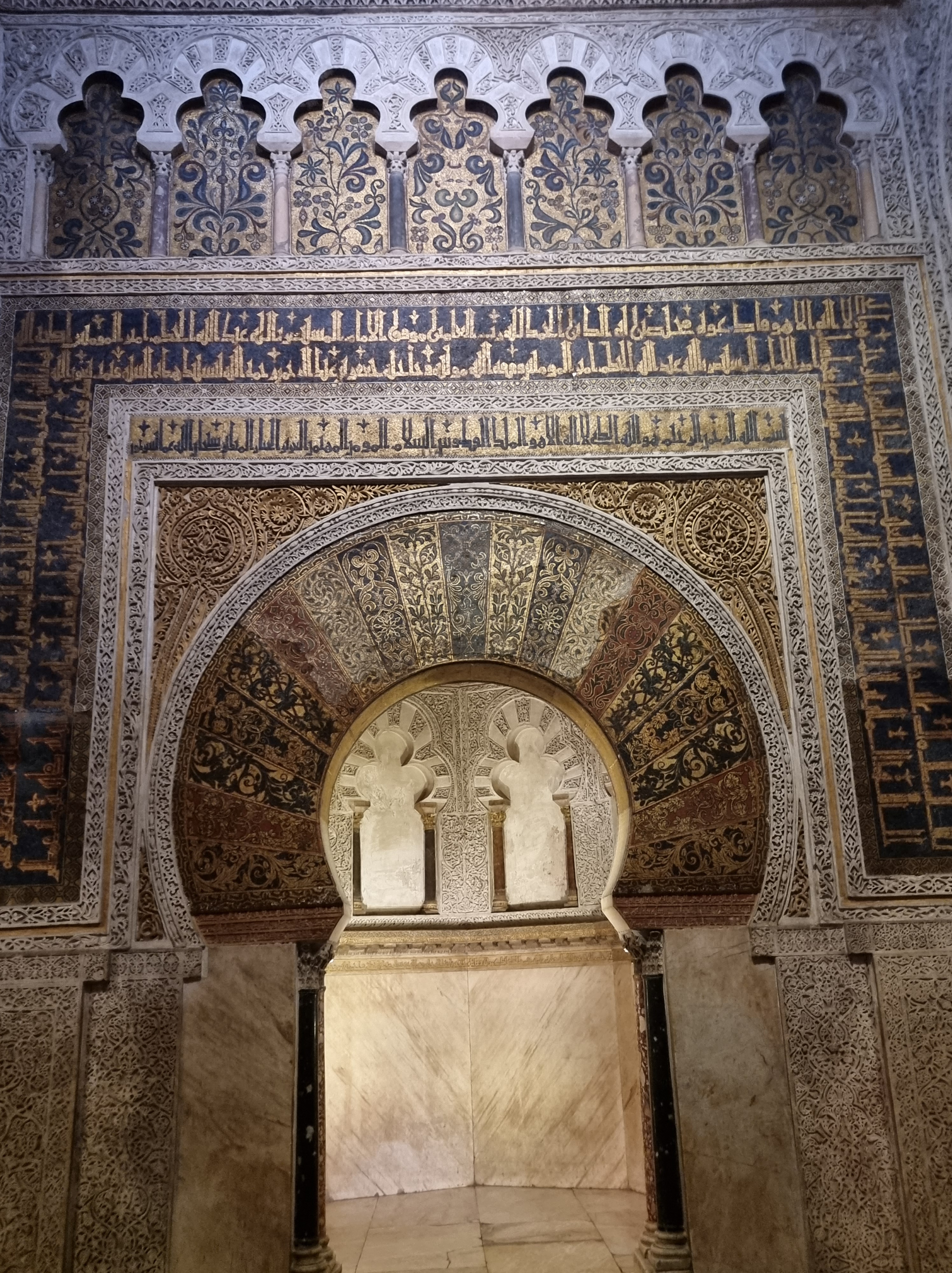
Clamouring for the so-called Golden Age of Islam is a staple across most of the Muslim World. Many still mourn the closing of a chapter of history that supposedly saw Islamic civilization reach its intellectual zenith, only for it to fizzle out abruptly and allow Western Europe to gallop forward with the full force of the Renaissance. The average modern educated Mussalman, Secularist or Islamist, equally laments the ceasing of the Golden Age. They live each moment with the indignation of having to explain to their European colleagues why Islamic civilization has “lagged behind”. The decline mantra has served as a recurrent club that has been used to beat to a pulp nearly all of today’s Muslim youth. It has quite effectively obfuscated the minds of a myriad of nations and races that are under the banner of Islam. Consider the brief version of the standard narrative that I have hinted to above. Islam’s supposed decline allowed Europe to take the lead. But where did it lead us to? The death of organized religion, loss of a metaphysical mode of thinking, the collapse of traditional social structures, potential nuclear Armageddon at a button’s push, the climate catastrophe, neurotic consumerism? This is what the Islamic world has apparently missed out on. The promoters of the standard narrative knowingly or unknowingly mourn the non-appearance of the above-mentioned transitions. They might retort by responding that what we lament is the non appearance of the Scientific Revolution, not any of the other deleterious movements or the disastrous aftermaths. To this, we would say that the Scientific Revolution is not an isolated strand that is distinct and decoupled from other strands. It arose alongside various other changes that were occurring in Europe, bureaucratization of the state, the rise of capitalism, looting of the New World. Yet despite all of this the formulation of Science as we know it today is thought to be the singular greatest loss that the Islamic World has suffered as a result of the Golden Age coming to a halt. The premise of this idea is a false perception that the traditional mode of learning in the Islamic World would have paved the way for its modern economy oriented counterpart. It is this conviction that has permeated the educated masses and which has, over the past century or two, mutated into an all consuming grief that grows with every generational bequeathal. A manifestation of this condition in the context of Pakistan is the discourse surrounding astrolabes indigenous to Lahore. A good number of historians, physicists and astronomy enthusiasts tend to portray these medieval mechanical devices as an example of Lahore’s, and by extension, the Islamic world’s scientific ingenuity. The precision in measurements and the craftsmanship is hailed as unprecedented for its time and an indication of the region’s expertise in instrument design. A link is then forged between what once was and what we could be now, if we look towards the past. The glorious astrolabe tradition, according to them, can pave the way for today’s cutting edge astrophysical research. If Muslims back then could master astrolabe construction for computing prayer times and navigation, then surely today they can master CCD construction and building data reduction pipelines for ESO’s latest spectrographs. I contest that this is a faux equivalence. To convince oneself of this, one need only to look carefully at an astrolabe. In particular look at the intricate floral patterns that engulf its main body. Yes the dials, angular marks, constellation names and cardinal directions are all aids for making measurements but what of the floral pattern? Why adorn the device with an element taken straight from Islamic architecture? To ask a more penetrating question, why does an astrolabe, an alleged vessel for empiricism, have etched on its body something that evokes transcendence? Geometrical floral patterns seen in mosques, shrines or palaces serve as a representation of the Divine, the Eternal, the All Knowing, the All Powerful. The sacred motifs seek to signify Ultimate Truth, which transcends the bounds of intellect and sensory data. Contrast this to what we have in modern astronomy. An abundance of ultra precise, finely attuned, and industry standardized telescopes. Optimised down to the minutest detail, yet devoid of even the faintest speck alluding to the Sublime. The ardent astronomy promoter might retort, saying that the myriad of technical finishes on his telescope are akin to the geometrical motifs of the astrolabes. However one wishes to categorise the technical paraphernalia, what they certainly are not, are symbols of the Divine. The instruments are representative of their respective eras. The astrolabe belongs to an era of enchantment, while the telescope belongs to the current scientistic epoch. An epoch marked by control, accurate calculations and the hyper fragmentation of the human being and his cosmos.
 Afkar-e-Qurtuba