In many Muslim lands and abroad, one hears a great many times how ‘culture’ has become a direct competitor to Islam. These individuals, often belonging to the educated strata, lament vociferously how Islam has been adulterated with cultural practices and that the two ought to be separated. The underlying assumption in their framing is a very sharp bifurcation between religious and cultural practices. The cultural practices tend to be those that are generally associated with closely knit kinship networks, or those prevalent in more tribe oriented societies. We do not contest that some of these practices may be at loggerheads with Islamic principles. However, we do find it perplexing that while traditional ‘customs’ are all too easily dissected and deconstructed in the pursuit of the Haqq, the same approach is not adopted when it comes to the customs of the modern age. It is as if all that is old clashes with Islam strangely nothing in our hedonistic age strikes these Mujaddids as remotely problematic. It may be the case, in fact it usually is, that these reformers will protest or express uneasiness at certain manifestations of modernity. The ones that are external and largely cosmetic. Yet, their analyses fail to diagnose the root of the problem, i.e. the principles at play. For example, not a finger is pointed at the invasive power of the state and corporations, how virtually the bulk of one’s time is now wasted by unwanted advertisements that are thrust upon us from all directions goes unnoticed. The modern arrangement of human beings also goes unnoticed by these warriors of Islamic purity. The segregation of people based on their qualifications and purchasing power, and their coerced labour under the thumb of the ‘work place’. The work place, which has been so deified and lionized in the modern world, at its core is a place where one is at the mercy of the other’s worst impulses. The Nafs unleashed. It is bound together not by any higher sacred principles but rather by the machinations of trustees and board members. Employment is central to the cosmology of modernity, since it is meant to fill the wake formed in the aftermath of disenchanting the cosmos. It is the most coveted prize after one endures years of smelting in the cauldrons of education. This all-pervading centrality once again goes unchallenged by the purifiers. Despite their proclamation of having stumbled upon the one true pristine version of Islam, they remain entranced and enchanted by the socio-economic matrix in which they are embedded. Their levelling project so disingenuous and hollow that it remains blind to the underlying assumptions of the modern cage, focusing only on dismembering the traditional in the name of religion. They have become the ultimate vector for secularisation. The hyper invasive state and market, the pressure to conform and submit to whatever fleeting hashtag has been hoisted upon the world, the decimation of one’s history, the complete profanization of religious rituals, remain unchallenged by the puritans. They have conflated the sacred with the profane, abundance with virtue, and most importantly, hiss with aqal. The edifice of their beliefs so flimsy and whimsical that even the minutest of strikes either causes them to capitulate and conform, or merge in totality with the materialists, giving up in an instant the last embers of faith. This might seem strange, perhaps even unthinkable for others in their ranks but to us it is as clear as day. It is inevitable. Once the Mussalman has been decoupled from his roots, when he starts to scoff and scorn at the legacy of the Prophet, or becomes fully bedazzled by the Western notion of progress, he is verily at a loss. To reject tradition, as the puritans have done, leaves two alternatives. The first is to construct a new “pseudo-tradition”, to fill in the void left by eviscerating the actual tradition. We are careful to label this as pseudo-tradition since those who prop this up claim this to be something other than tradition. Less rigorous, more expansive, not as demanding as the tradition usually is and most importantly not committed to maintaining some semblance of continuity. Thus, this approach necessarily results in fragmentation. With no anchoring principles, no commitment to hold on to the sacred chain, such endeavours will result in nothing other than atomisation. The second alternative is to surrender to the Hegelian notion of progress, and the mechanistic conception of the Universe. At first glance this may seem to be the worse of the two, but the two are closely linked than one might be inclined to believe. Both alternatives operate under the assumption that the old must be done away. They both are fixated on chasing a utopia that does not exist, and in fact cannot exist. It is therefore not surprising to see those puritans who are so engrossed in picking apart the foundations of the tradition intellectually maimed by the notion of progress. Their claim of a new, fresh and “forward” looking version of Islam at some point becomes eerily synonymous with the West’s efforts to efface whatever semblance of traditional vestiges remain on the planet.
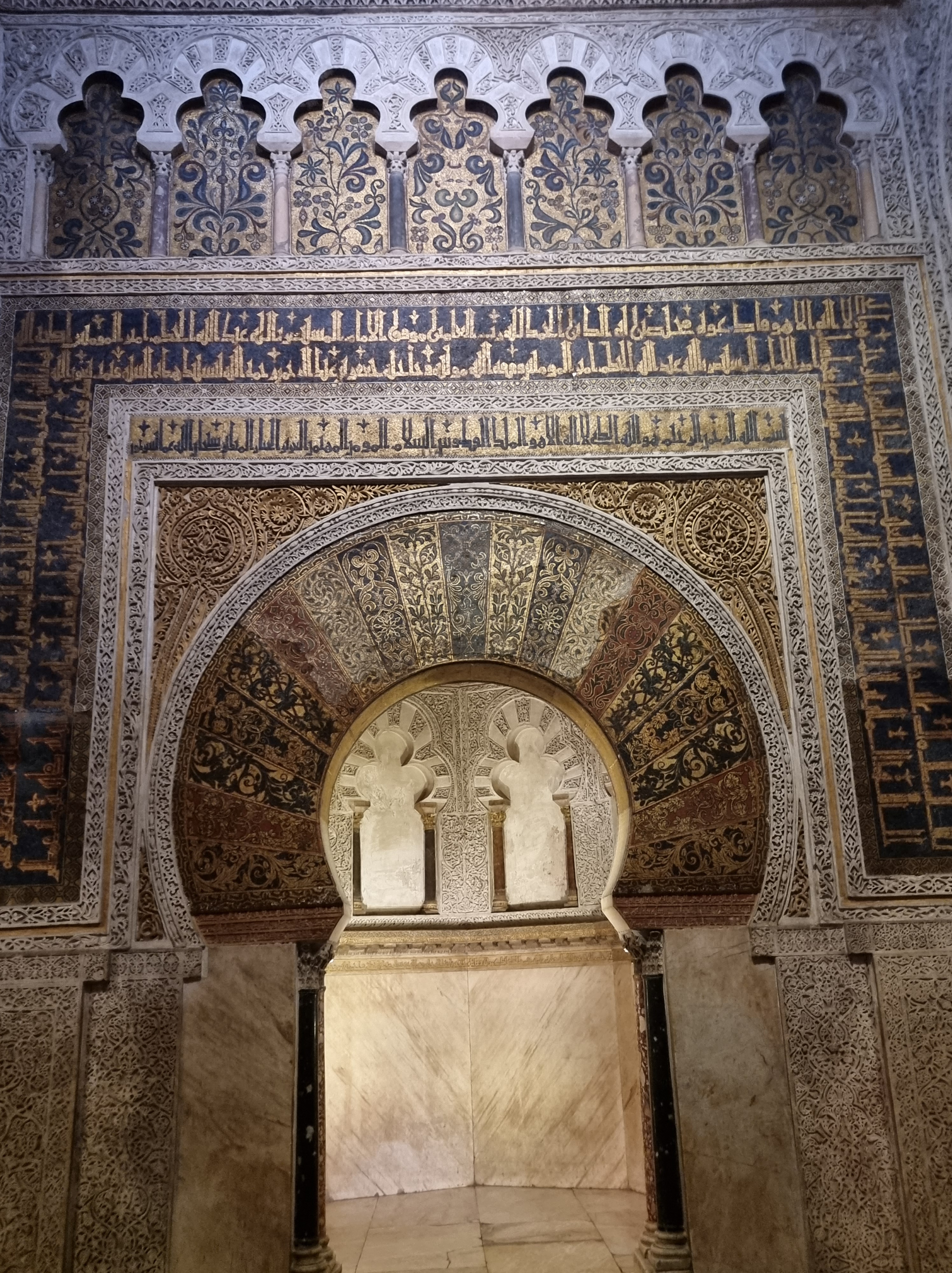
 Afkar-e-Qurtuba